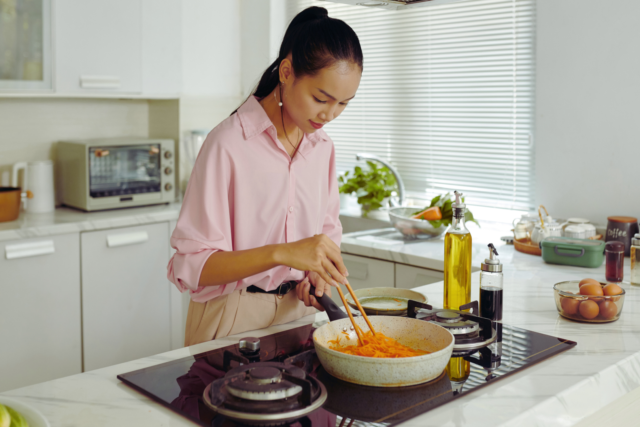
You step into the kitchen with a clear goal: cook simple, tasty meals that fit your time and budget. You will learn basic techniques, essential tools, and easy recipes that make home cooking practical and rewarding.
This guide breaks down starting steps into small, confident moves so you can build skills without stress. It shows how to choose reliable recipes, set up a functional workspace, and practice techniques that turn ingredients into satisfying meals.
How to Start Home Cooking as a Beginner
They need a small set of reliable tools, a compact pantry of versatile ingredients, and a focus on a few basic techniques that build confidence quickly. Practical habits—reading recipes fully, practicing knife work, and planning a few meals—make learning repeatable.
Essential Kitchen Tools for Beginners
Start with a good chef’s knife, a paring knife, and a serrated bread knife. A solid cutting board (wood or plastic) and a sharpener or honing steel keep knives safe and effective.
Measure with a set of measuring cups and spoons plus a liquid measuring cup. Use mixing bowls in three sizes for prep, marinating, and mixing batter. Include wooden spoons, a silicone spatula, tongs, and a whisk for most tasks.
Cookware: acquire one 10–12″ skillet, a medium saucepan, a stockpot for boiling or soups, and a 5–6 quart Dutch oven or slow cooker for braises and stews. Add oven mitts, a can opener, and a baking sheet. If space allows, a wok or nonstick pan helps with stir-fry and quick cooking.
Small appliances: a reliable oven, a stovetop, and optionally a slow cooker or blender cover many beginner needs. Prioritize quality for the chef’s knife, skillet, and cutting board; they have the largest impact on safety and results.
Key Pantry Staples and Basic Ingredients
Keep olive oil and a neutral oil (canola or vegetable) on hand for cooking and dressings. Store both butter and a shelf-stable fat like ghee for different flavors and high-heat cooking.
Stock dry goods: rice, dried pasta, canned tomatoes, canned beans, and low-sodium broth. Add flour, sugar, and baking powder for basic baking and thickening. Keep soy sauce and vinegar (white and balsamic) for seasoning and sauces.
Herbs and spices to start: salt, black pepper, cumin, paprika, and dried oregano or thyme. Fresh produce essentials: onions, garlic, carrots, celery, lemons, and seasonal vegetables. Include eggs, milk (or plant milk), and a block of cheese for quick breakfasts and simple dinners.
Organize staples so that frequently used items sit at eye level. Label jars and rotate stock to avoid waste. Buying small amounts initially reduces spoilage while building a functional pantry.
Fundamental Cooking Techniques and Methods
Learn knife skills first: grip the chef’s knife, use a rocking motion, and practice uniform cuts like dice and slicing. Proper technique improves safety and reduces cooking time.
Master heat control on the stovetop: medium-high for sautéing, medium for simmering, and low for gentle simmering. Practice sautéing with oil and aromatics to build flavor. Understand searing in a hot skillet to develop browning on meats and vegetables.
Practice boiling for pasta and blanching vegetables; simmering for soups and sauces; roasting in the oven for vegetables and proteins; and stewing/braising in a Dutch oven or slow cooker for tender results. Try steaming delicate fish and vegetables and grilling for char and smoke.
Follow recipes precisely at first to learn timing and proportions. Then experiment with flavor profiles—swap herbs or spices, add acid (lemon or vinegar), or finish with butter to enrich sauces.
Simple Recipes and Meal Planning
Begin with a handful of reliable recipes: roasted chicken thighs, pan-seared salmon, pasta with tomato sauce, vegetable stir-fry, omelets, and a basic soup. These cover roasting, searing, simmering, sautéing, and boiling.
Plan meals by picking 2–3 proteins, 3–4 vegetables, and a starch for the week. Cook double portions of grains or roasted vegetables to reuse in bowls, salads, and lunches. Use a simple template: protein + vegetable + starch to assemble balanced meals quickly.
Keep a list of go-to recipes and note timing, favorite substitutions, and common mistakes. Schedule one learning night per week to try a new technique or recipe from a trusted source or cooking course. Small, consistent practice builds skills and confidence.
Leave a Reply