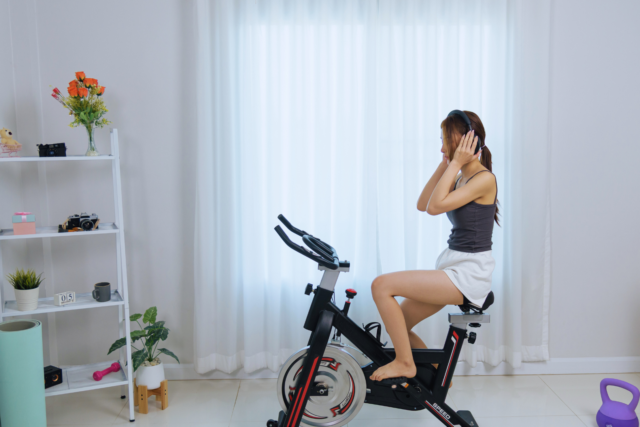
You can start building strength and consistency with simple, equipment-free moves you can do in a small space. A short, structured routine you can follow three times a week will improve strength, mobility, and energy without overwhelming your schedule.
They will find clear, progressive steps for warming up, core bodyweight exercises, and cooldowns, plus guidance on sets, reps, and pacing tailored for beginners. The article breaks the plan into manageable sessions so they can track progress and adapt intensity as fitness improves.
Step-by-Step Beginner Workout Plan at Home
This section describes practical steps for safe, progressive bodyweight and light-dumbbell training at home, including warm-ups, core movements, weekly structure, and simple progression strategies. It emphasizes controlled technique, measurable progression, and built-in recovery to build full-body strength and aerobic capacity.
Foundations of At-Home Training
They should create a small training zone: 6–8 feet of clear floor space and a non-slip exercise mat. Basic equipment includes a pair of light dumbbells (5–20 lb), a sturdy chair, and a door or towel for rows; none of these are strictly required for bodyweight workouts.
Focus on compound, controlled movements: squats, lunges, push variations, glute bridges, planks, and simple rows. Emphasize 8–15 reps per set for strength-endurance and 2–4 sets per exercise, depending on fatigue. Track sets, reps, and perceived exertion to apply progressive overload over weeks.
Prioritize movement quality over volume. Use tempo cues (2–3 second lowering phase, controlled concentric) and full range of motion. Rest 60–90 seconds between sets for beginners; increase rest only if form breaks down.
Essential Warm-Up and Mobility Movements
Begin with 5–8 minutes of low-impact cardio: brisk walking in place, marching, high knees (low-impact), or 60–90 seconds of jumping jacks if joints tolerate it. The goal is to raise heart rate and body temperature without pre-fatiguing muscles.
Follow with dynamic mobility: leg swings (10 each side), arm circles (10 forward/back), hip circles (8 each direction), and thoracic rotations (8 each side). These prepare joints for squats, lunges, and pushes.
Add movement-specific warm-up sets: 8–10 bodyweight squats with slow tempo, 6–8 incline or wall push-ups, and 8–10 glute bridges. Finish with 30–45 seconds of plank variations (dead bug or bird dog if plank too challenging) to prime core stability.
Core Bodyweight Exercises for Full-Body Strength
Select 4–6 exercises to form a circuit: bodyweight squat (or chair/assisted/goblet squat), reverse lunges or walking lunges, incline/wall/knee push-ups, glute bridge (or glute bridge march), and doorway/dumbbell row. Add calf raises and dead bug or bird dog for the posterior chain and core.
Example set structure: 3 rounds of 8–12 reps per exercise with 60–90 seconds rest between rounds. For push progressions, start with wall push-ups, progress to incline push-ups (counter/table), then knee push-ups, then full push-ups. For rows, use a doorway row or bent-over dumbbell row if available.
Emphasize pelvic alignment and scapular control: keep neutral spine on squats and glute bridges; retract shoulder blades on rows; avoid hips sagging on planks and side planks. Controlled movement reduces injury risk and improves strength transfer.
How to Progress Your Home Workouts Effectively
Progress systematically: increase reps, add sets, reduce rest, or change leverage before adding weight. Track one parameter at a time for 2–3 sessions; for example, add 2–3 reps to squats each workout until reaching 15, then increase resistance or shift to single-leg variations.
Use regressions and progressions. If a movement becomes easy, shift from assisted to unassisted version (chair squat → bodyweight squat → goblet squat). If form fails, step back to an easier variation or reduce the range of motion.
Incorporate light dumbbells for goblet squats, dumbbell rows, and goblet holds when bodyweight becomes insufficient. Apply progressive overload every 1–3 weeks and schedule a deload week (reduced volume) every 4–6 weeks.
Weekly Workout Structure and Active Recovery
A simple weekly plan: 3 strength-focused home workouts (30–45 minutes) on nonconsecutive days (e.g., Monday, Wednesday, Friday). Add 1–2 low-impact cardio or mobility sessions (20–30 minutes brisk walking, cycling, or dynamic mobility) on off days.
Structure each strength session: 5–8 minute dynamic warm-up, 25–30 minutes of circuits or supersets targeting full-body strength, then 3–5 minutes of core work and stretching. Reserve one full rest day per week for recovery.
Active recovery options: brisk walking, easy cycling, gentle yoga, or mobility drills. Use foam rolling or light stretching 5–10 minutes after sessions to reduce soreness and maintain mobility.
Tips for Staying Consistent with Your Routine
They should set specific, measurable targets: number of workouts per week, exact exercises, and small progression goals (e.g., add 2 reps per week). Schedule sessions like appointments and prepare gear the night before to reduce friction.
Keep workouts short and focused—30–45 minutes—so time barriers stay low. Vary exercises every 4–6 weeks to prevent boredom and plateauing while keeping core compound movements consistent.
Track progress with a simple log or app. Reward consistency (non-food) after weekly or monthly goals. If motivation drops, switch to a lower-intensity active recovery day instead of skipping entirely to maintain the habit.
Leave a Reply